
Peptide Calculator
Calculate concentration, injection volume, and insulin units for Retatrutide, GHK-Cu, Semaglutide, Glow & Klow Stack, and more peptides.
Select peptide
GLP-1 and metabolic peptides
Growth hormone peptides (GHRH, GHRP)
Recovery and skin peptides
Cognition and sleep peptides
Peptide stacks
More peptides
Enter values
Your result
Recommended: —
Draw: —.

BD MICRO-FINE+ 0.5 ml
Fine-dose syringe for subcutaneous injection
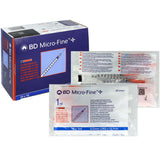
BD MICRO-FINE+ 1.0 ml
Fine-dose syringe for subcutaneous injection

HaseMed Sharps Container 0.5L
For hygienic disposal of used needles
Titration Planner
Create a personalized week-by-week titration schedule.
Your plan
| Week | Dose/week | Per injection | mL | IU | Syringe |
|---|
Peptide Guide
Overview of common peptides. Click 'Open in calculator' to use values.
Further articles
Convert units on U100 and U40 syringes to ml and mg
Convert insulin syringe units to ml and mg for your peptide concentration, on U100 or U40 syringes. The concentration comes from the peptide amount in the vial and the BAC Water.
Peptide Calculator: Why Precise Dosing Is Critical
Correct peptide dosing is critical for efficacy and safety. Our free Peptide Calculator automatically computes concentration, injection volume, and insulin units (IU) for all common peptides. Whether you use Retatrutide, Semaglutide, Tirzepatide, GHK-Cu, BPC-157, TB-500, CJC-1295 no DAC, or Ipamorelin — precise calculation is the foundation of every subcutaneous injection. Dosing errors can lead to ineffective treatments or unwanted side effects. Our Peptide Calculator and peptide mixing calculator eliminates these risks and gives you confidence with every application.
Retatrutide Calculator — Calculate GLP-1/GIP/GCG Dosage
Retatrutide is being studied for its action on GLP-1, GIP, and glucagon receptors. Its glucagon receptor activity is of interest in research on energy expenditure and liver fat. The selected Phase 3 research schedule uses weekly 2, 4, 6, 9, and 12 mg levels with four-week steps. These figures describe a trial schedule, not a general treatment standard or an approved dosing recommendation.
The selected Phase 3 research schedule starts at 2 mg weekly and moves through 4, 6, 9, and 12 mg in four-week steps. For a separate 10 mg research vial with 2 ml bacteriostatic water, the calculated concentration is 5 mg/ml, so 2 mg occupies 0.4 ml or 40 U-100 syringe marks. The calculator maps the selected study levels to vial volume; marks are not international units. Weekly subcutaneous dosing describes the trial route, not a validated schedule for this research vial or an individual treatment plan.
→ Calculate Retatrutide dose now
View Retatrutide at BergdorfBioCustomer recommendationOpens in new tab
Semaglutide Calculator — Calculate GLP-1 Dose
Semaglutide is a GLP-1 receptor agonist used for the treatment of type 2 diabetes and obesity. As the active ingredient in well-known pre-filled pens, Semaglutide is one of the most widely prescribed GLP-1 agonists worldwide. Its mechanism of action is based on mimicking the body's own GLP-1 hormone, which stimulates insulin secretion, reduces appetite, and slows gastric emptying.
Semaglutide dosing follows a five-step titration schedule: start with 0.25 mg per week for 4 weeks, then increase to 0.5 mg, 1.0 mg, 1.7 mg, and finally 2.4 mg per week. Each titration level is maintained for at least 4 weeks to ensure tolerability. For a 5 mg vial with 2.5 ml BAC water, the concentration is 2 mg/ml. The starting dose of 0.25 mg equals 0.125 ml (12.5 IU). The Semaglutide Calculator automatically computes these values for any desired dose and shows how many doses your vial yields. Reconstituted Semaglutide should be stored in the refrigerator at 2-8°C and is typically stable for 28-30 days after mixing.
Tirzepatide Calculator — Calculate Dual GLP-1/GIP Dosage
Tirzepatide is a dual GLP-1/GIP receptor agonist used as the active ingredient in well-known pre-filled pens. The combination of both incretin receptors produces stronger metabolic effects than pure GLP-1 agonists. In clinical trials, Tirzepatide showed superior weight reduction and blood sugar control compared to Semaglutide.
Approved tirzepatide product information describes weekly levels of 2.5, 5, 7.5, 10, 12.5, and 15 mg, with at least four weeks before each increase. A separate 10 mg research vial with 2 ml water calculates to 5 mg/ml: 2.5 mg occupies 0.5 ml or 50 U-100 marks. At 7.5 mg, the calculated volume is 1.5 ml, beyond a 1 ml syringe's capacity. This is a syringe-capacity limit, not a mixing recommendation; the research vial is not the approved product.
GHK-Cu Calculator — Calculate Copper Peptide Dosage
GHK-Cu is a copper-binding tripeptide studied in skin, wound, and tissue research. The calculator preset is 1 mg and does not automatically change after two weeks. Some provider reports separately describe a move from 1 mg daily to 2 mg after two weeks, but these are practice figures, not study dosing or evidence of benefit. Sources discuss both topical and subcutaneous use; the research vial is not an approved medicinal product.
With 50 mg GHK-Cu in 5 ml water, the calculated concentration is 10 mg/ml. The 1 mg preset occupies 0.1 ml, or 10 U-100 marks; a separately reported 2 mg amount would occupy 20 marks. The calculator shows volume for the chosen vial and water amount, not an automatic progression from 1 to 2 mg. Provider descriptions of such a progression do not establish study dosing, safety, or efficacy for the research preparation.
View GHK-Cu at BergdorfBioCustomer recommendationOpens in new tab
BPC-157 Calculator — Body Protection Compound Dosage
BPC-157 (Body Protection Compound-157) is a synthetic peptide related to a protein found in human gastric juice. Research on tissue repair and gut effects is largely preclinical; it does not establish a human dose or demonstrate a regenerative treatment in routine medical use. The calculator presents an arithmetic example based on reported provider and user practice, not a clinically validated regimen. Human dosing, effectiveness, and safety remain open questions, so these figures should not be mistaken for treatment guidance.
Reported provider and user practice describes 250–500 mcg per injection, once daily; this is not a studied or established human dosing recommendation. The calculator preset uses a 5 mg vial and 2 ml diluent, giving 2.5 mg/ml. At the selected 0.25 mg (250 mcg), the calculated volume is 0.1 ml, or 10 marks on a U100 syringe. These figures explain the preset arithmetic only. The preparation and its use are not validated by these reported practice figures.
View BPC-157 at BergdorfBioCustomer recommendationOpens in new tab
TB-500 Calculator — Calculate Thymosin Beta-4 Dosage
TB-500 refers to research material related to thymosin beta 4 fragments studied in tissue repair and regeneration. Provider sources report 2.5 mg per injection, twice weekly for four weeks and once weekly thereafter. That pattern and amount are practice figures, not human study dosing. The calculator can show the volume that corresponds to the selected amount and mixture, but it cannot establish a treatment schedule or predict healing or performance outcomes.
With 10 mg TB-500 in 2 ml bacteriostatic water, the calculated concentration is 5 mg/ml. A reported 2.5 mg amount then occupies 0.5 ml, or 50 marks on a U-100 syringe. Provider descriptions of twice-weekly use for four weeks followed by once-weekly use do not establish a validated regimen. The calculator only converts the chosen research-vial and water amounts into volume and syringe marks; it does not turn this material into an approved product.
View TB-500 at BergdorfBioCustomer recommendationOpens in new tab
More Peptides: CJC-1295, Ipamorelin, AOD-9604 & More
CJC-1295 no DAC — GHRH Analog
CJC-1295 no DAC (without Drug Affinity Complex) is a GHRH analog that stimulates natural growth hormone release. It is typically administered at doses of 100-200 mcg (0.1-0.2 mg) per injection, 1-3 times daily subcutaneously. Optimal use on an empty stomach, often in the evening before sleep. CJC-1295 is frequently combined with Ipamorelin to maximize GH release. Vials of 2-5 mg are common.
Ipamorelin — Growth Hormone Releasing Peptide
Ipamorelin is a selective GHRP (Growth Hormone Releasing Peptide) that stimulates growth hormone release without significantly affecting cortisol or prolactin levels. Dosing: 200-300 mcg (0.2-0.3 mg) per injection, 2-3 times daily. Particularly popular in combination with CJC-1295 no DAC for optimal GH stimulation, improved sleep quality, and fat reduction.
AOD-9604 — GH Fragment for Fat Burning
AOD-9604 is a modified fragment of human growth hormone (amino acids 177-191) that specifically stimulates fat burning without the insulin-resistant properties of the complete GH molecule. Standard dosing: 300 mcg (0.3 mg) once daily on an empty stomach. AOD-9604 has a favorable safety profile and is being studied for metabolic health and body composition.
PT-141 (Bremelanotide) — Melanocortin Agonist
PT-141 is a research name for bremelanotide. Approved Vyleesi is a 1.75 mg single-dose autoinjector for premenopausal women with acquired, generalized hypoactive sexual desire disorder (HSDD); its indication does not extend to men or all women. Its label limits use to one dose in 24 hours and eight doses per month. A separate 10 mg research vial with 2 ml water would calculate to 35 U-100 marks for 1.75 mg; it is not Vyleesi. Lower starting amounts for men in secondary reports are not approved label dosing.
MOTS-c — Mitochondrial Peptide
MOTS-c is a mitochondria-derived peptide studied in metabolic and exercise research. Forum reports describe 1 to 5 mg three times weekly, including 1 mg and 2.5 mg steps; a provider describes a different once-weekly starting pattern. With 10 mg in 1 ml water, the calculated concentration is 10 mg/ml, so 1 mg equals 10 U-100 marks and 5 mg equals 50. No human dose has been verified. The calculator shows volume for reported amounts, not a validated schedule or treatment effect.
Selank — Anxiolytic Peptide
Selank is a synthetic tuftsin analog investigated for neurological effects. A provider's subcutaneous practice example reports exactly 0.25 mg per injection, once or twice daily; it is not a clinically established dose. The calculator assumes 10 mg with 4 ml diluent for arithmetic purposes, producing 2.5 mg/ml; 0.25 mg then corresponds to 0.1 ml, or 10 marks on a U100 syringe. The 4 ml assumption is not a provider preparation recipe. Intranasal study regimens do not establish this subcutaneous example's effects or safety.
SS-31 (Elamipretide) — Mitochondrial Protection
SS-31 (Elamipretide) is a peptide studied in mitochondrial disease and heart failure contexts. The calculator's 4 mg preset comes from reported user practice, not a validated research-vial regimen. With an assumed 10 mg vial and 1 ml diluent, the concentration is 10 mg/ml, making 4 mg equal to 0.4 ml or 40 marks on a U100 syringe. PROGRESS-HF also studied 4 mg, but does not validate this preparation or regimen. Approved FORZINITY belongs to a different product context; research-powder composition and solution stability remain open questions.
Cagrilintide calculator for reconstitution and syringe units
The Cagrilintide calculator maps weekly study doses to U-100 syringe marks. In the cagrilintide-only arm of NCT04982575, adults with type 2 diabetes received 0.25, 0.5, 1, and 1.7 mg for four weeks each, then 2.4 mg for 16 weeks: 32 weeks total. Investigators could delay or reduce doses. Separately, 5 mg in 2 ml gives 2.5 mg/ml; 0.25 mg equals 10 marks and 2.4 mg equals 96. The planner reflects the study schedule, not a general treatment standard; the research vial is not the study pen.
→ Calculate Cagrilintide dose now
Survodutide calculator for weekly step dosing
The Survodutide calculator converts weekly study doses into volumes and U-100 syringe marks for a research vial. Phase 2 group D used nine levels, from 0.3 to 4.8 mg, at two-week steps; the protocol allowed adjustments from week 11 and reached 4.8 mg from week 17. The study lasted 46 weeks, longer than the step sequence alone. At 10 mg in 2 ml, the calculated concentration is 5 mg/ml, making 0.3 mg equal to 6 marks. This schedule describes a study, not a general treatment standard.
→ Calculate Survodutide dose now
5-Amino-1MQ calculator for reconstitution and units
The 5-Amino-1MQ calculator converts a research-vial amount and selected water volume into concentration and U-100 syringe marks. With 10 mg in 1 ml, the calculation gives 10 mg/ml: 2.5 mg equals 25 marks and 5 mg equals 50. The 2.5 to 5 mg subcutaneous figures come from provider and practice reports, not from a conversion of preclinical data; no human dose is established. Sources conflict on oral versus subcutaneous use, and the vial's salt form and what its stated milligrams measure remain unclear. These figures are arithmetic, not evidence of efficacy.
→ Calculate 5-Amino-1MQ dose now
CJC-1295 no DAC + Ipamorelin blend calculator for syringe volume
For this 1:1 blend, the calculator expresses mass and concentration per component: 5 mg of CJC-1295 no DAC plus 5 mg of ipamorelin in 3 ml gives about 1.667 mg/ml of each. A reported 0.1 mg of each component draws 0.06 ml, or 6 U-100 marks, of the shared solution. Evening use on a five-days-on, two-days-off pattern is reported practice, not study dosing. Adopting calculator values also adopts their per-component basis; resetting restores standard values. Custom values retain their selected basis. Syringe marks always measure the full solution volume.
→ Calculate CJC-1295 no DAC + Ipamorelin 1:1 blend dose now
Sermorelin calculator for reconstitution and U-100 units
The Sermorelin calculator converts research-vial amounts and water volume into concentration and U-100 syringe marks. At 5 mg in 2 ml, the calculated concentration is 2.5 mg/ml; 200 mcg equals 8 marks and 300 mcg equals 12. Provider and user reports describe 200 to 300 mcg once daily in the evening, but these are practice figures, not study doses. The calculator shows how a selected amount translates into volume; it does not establish a dose or predict a treatment effect.
→ Calculate Sermorelin dose now
Tesamorelin calculator for the 2 mg label context
The Tesamorelin calculator uses a 2 mg reference from the original EGRIFTA label and associated HIV studies. EGRIFTA SV uses 1.4 mg and EGRIFTA WR uses 1.28 mg; these are doses of different formulations, not interchangeable salt alternatives. For a separate research-vial calculation, 10 mg in 2 ml gives 5 mg/ml, so 2 mg occupies 0.4 ml or 40 U-100 syringe marks. These marks measure volume, not international units. The research vial is not any of the labeled products, and this calculation does not equate their doses.
→ Calculate Tesamorelin dose now
KPV calculator for reconstitution and syringe units
The KPV calculator converts a research-vial amount and water volume into concentration and U-100 syringe marks. With 10 mg in 2 ml, the result is 5 mg/ml: 200 mcg equals 4 marks, 250 mcg equals 5, and 500 mcg equals 10. The 200 to 500 mcg once-daily subcutaneous range comes from provider and forum reports, not human study dosing. At 5 mg/ml, the mixture sits at the reported solubility limit for KPV acetate and above that reported for the free base; the vial's form matters and remains unclear.
Semax calculator for reconstitution and U-100 units
The Semax calculator translates a research-vial amount and selected water volume into concentration and U-100 syringe marks. With 10 mg in 2 ml, the calculated concentration is 5 mg/ml; 500 mcg equals 10 marks and 1 mg equals 20. Forum reports describe 250 to 1000 mcg subcutaneously, often once daily in the morning. These are not clinical subcutaneous study doses or label dosing. The calculation shows volume only and cannot establish an effective or appropriate dose.
DSIP calculator for reconstitution and syringe units
The DSIP calculator converts research-vial amounts and water volume into concentration and U-100 syringe marks. At 10 mg in 2 ml, the arithmetic gives 5 mg/ml; a reported 0.5 mg subcutaneous amount equals 10 marks. Older intravenous studies do not validate that subcutaneous figure or its reported evening timing. The vial's salt form is unknown; if it is the free base, 5 mg/ml exceeds the reported 0.5 mg/ml solubility. Whether this mixture dissolves as calculated remains open, so the marks alone cannot establish a usable preparation.
Pinealon calculator for reconstitution and units
The Pinealon calculator maps a 10 mg research vial and 2 ml water to a calculated 5 mg/ml and U-100 syringe marks. Its 2 mg preset equals 40 marks; a separately reported 1 mg starting amount would equal 20 marks at the same concentration. Forum reports describe about 20 days of use followed by a pause, while other reports vary in dose and duration. Neither amount nor schedule is established by clinical dosing evidence. The 1 mg report does not replace the 2 mg preset; the calculator shows volume rather than a treatment plan.
Epithalon calculator for reconstitution and units
The Epithalon calculator maps research-vial amounts and water volume to concentration and U-100 syringe marks. With 10 mg in 2 ml, the calculated concentration is 5 mg/ml, so 5 mg occupies 1 ml or 100 marks on a 1 ml syringe. Provider and community reports describe 5 mg daily for 10 to 20 days, repeated once or twice a year; these are not study doses. The source also cautions against concentrations above 5 mg/ml. The calculation cannot establish a regimen or a longevity benefit.
→ Calculate Epithalon dose now
NAD+ calculator for reconstitution and syringe units
The NAD+ calculator converts a research-vial amount and water volume into concentration and U-100 syringe marks. At 1000 mg in 5 ml, the result is 200 mg/ml: 50 mg occupies 0.25 ml or 25 marks, and 100 mg occupies 50 marks. Provider reports describe 50 to 100 mg, with daily or three-times-weekly subcutaneous use and suggestions for gradual increases. These are practice figures, not study dosing or an established regimen. The syringe calculation does not demonstrate safety or benefit.
Kisspeptin-10 calculator for reconstitution and units
The Kisspeptin-10 calculator translates research-vial amounts and water volume into concentration and U-100 syringe marks. With 10 mg in 5 ml, the calculated concentration is 2 mg/ml; 100 mcg equals 5 marks and 200 mcg equals 10. The 100 mcg daily figure comes from forum reports, not a label or study regimen. Solubility in bacteriostatic water and the mixed solution's shelf life are unverified. The syringe calculation cannot resolve either question or establish a treatment dose.
Peptide Stacks: Glow Stack & Klow Stack
Glow Stack (GHK-Cu + BPC-157)
The Glow Stack combines GHK-Cu and BPC-157 in one formulation for maximum skin rejuvenation and tissue repair. GHK-Cu stimulates collagen and elastin production, while BPC-157 accelerates wound healing and reduces inflammation. The synergistic effect of both peptides leads to visible improvement in skin quality, elasticity, and wrinkle reduction. Dosing: 0.5-2 mg per day subcutaneously.
→ Calculate Glow Stack dose now
View Glow Stack at BergdorfBioCustomer recommendationOpens in new tab
Klow Stack (Anti-Aging Blend)
The Klow Stack is a specialized anti-aging blend targeting cellular regeneration and longevity. This stack combines regenerative peptides for holistic anti-aging effects — from cell repair to mitochondrial protection to skin quality improvement. Dosing: 0.5-2 mg per day subcutaneously. Ideal as a complement to a comprehensive anti-aging strategy.
How the Peptide Mixing Calculator Works
Correctly mixing (reconstituting) a lyophilized peptide is the most important step before injection. The basic formula is simple: Concentration = Peptide amount (mg) ÷ BAC Water (ml). From the concentration, the injection volume is calculated: Volume (ml) = desired dose (mg) ÷ Concentration (mg/ml). Finally, milliliters are converted to insulin units: IU = Volume (ml) × 100 (for U100 syringes).
Step-by-step guide: (1) Disinfect the rubber stoppers of both the peptide vial and BAC water with alcohol swabs. (2) Draw the desired amount of BAC water with an insulin syringe. (3) Inject the BAC water slowly along the inner wall of the peptide vial — never spray directly onto the powder, as this can damage the peptide. (4) Gently swirl the vial until the powder is completely dissolved. Do not shake! (5) Store the reconstituted peptide in the refrigerator at 2-8°C.
Common mistakes when mixing peptides: Spraying directly onto the powder (denatures the peptide), shaking instead of swirling (destroys molecular structure), using sterile water instead of BAC water (no antimicrobial properties, shorter shelf life), and improper storage after reconstitution. Our peptide mixing calculator completely eliminates calculation errors and shows you the exact amount for your configuration.
BAC Water: Bacteriostatic Water for Peptides
Bacteriostatic water (BAC water) is sterile water containing 0.9% benzyl alcohol as a preservative. This additive prevents bacterial growth and allows multiple withdrawals from a vial over a period of typically 28 days. In contrast, sterile water (NaCl 0.9%) is only suitable for single use — contamination risk exists immediately after opening. BAC water is therefore the gold standard for reconstituting peptides that will be used over multiple days or weeks. The recommended amount of BAC water varies by peptide and desired concentration — typically 1-5 ml. Less BAC water yields a higher concentration (less injection volume), while more BAC water yields a lower concentration (easier dosing for very small doses). Our calculator computes the optimal combination automatically.
Choosing the Right Insulin Syringe for Peptides
Why use fine-dose syringes for peptides?
U100 fine-dose insulin syringes are the gold standard for subcutaneous peptide injection. The fine 30G needles (0.30 mm diameter) minimize pain and tissue damage during injection. The U100 scale enables precise dosing in insulin units (IU), with 100 IU equaling exactly 1 ml. Compared with conventional syringes, fine-dose syringes provide substantially more precise volume control — especially important for peptides such as Semaglutide or BPC-157, where even small deviations can affect efficacy.
For subcutaneous peptide injections, insulin syringes with fine needles (30G or finer) are recommended. The choice of syringe size depends on the injection volume. U100 syringes have a scale of 100 insulin units per milliliter and are the standard for peptide applications.
BD MICRO-FINE+ Demi 0.3 ml (30G × 8mm): Ideal for small volumes up to 0.3 ml / 30 IU. Perfect for low titration doses of Retatrutide, Semaglutide, or BPC-157. The finer scale enables more precise dosing. BD MICRO-FINE+ 0.5 ml (30G × 8mm): The standard for medium volumes up to 0.5 ml / 50 IU. Suitable for most peptide applications and medium titration doses. BD MICRO-FINE+ 1.0 ml (33G × 12.7mm): For larger volumes up to 1.0 ml / 100 IU. Necessary for high doses such as TB-500 (2.5 mg) or Tirzepatide in advanced titration.
Pen needles (e.g., BD Micro-fine+ 4mm, 32G) are designed exclusively for pre-filled pens and cannot be used for vial-based injections. They are shorter and finer than syringe needles and are excellent for pre-filled pens with pre-mixed solution.
Proper Peptide Storage: Cold Chain & Shelf Life
Proper storage determines the efficacy and safety of your peptides. Lyophilized (freeze-dried) peptides in unopened vials are stable at room temperature for several months but should ideally be stored at 2-8°C in the refrigerator. Direct sunlight and temperatures above 25°C significantly reduce shelf life. After reconstitution with BAC water, peptides must always be stored in the refrigerator at 2-8°C. Shelf life after mixing is typically 21-30 days, depending on the specific peptide. GLP-1 agonists (Semaglutide, Tirzepatide, Retatrutide) are stable for approximately 28 days after reconstitution. Repair peptides (BPC-157, TB-500) last about 21 days refrigerated. Label each vial with the reconstitution date and concentration. For travel: Use an insulated bag with ice packs and avoid freezing.
Safe Disposal — Sharps Container
After every injection, needles and syringes must be safely disposed of in a certified sharps container. Never throw used needles in household waste or recycling — needlestick injuries from improperly disposed sharps pose a serious health risk. The HaseMed sharps container is available in two sizes: 2.5L for extended use and 0.5L as a compact travel option. Both containers are puncture-resistant, lockable, and meet medical standards. Full containers can be returned free of charge to pharmacies, medical practices, or municipal collection points.
Why is a sharps container essential?
Used cannulas and injection needles do not belong in normal household waste. Without a suitable sharps container, they create serious risks for you, other people, and waste-disposal staff:
- Needles can pierce waste bags and cause needlestick injuries when the waste is removed or compacted
- Waste and recycling workers are regularly injured by improperly discarded needles — an avoidable occupational risk
- In the worst case, needlestick injuries can transmit infectious diseases (for example, hepatitis B/C)
Legal basis in Germany
Under Germany's TRBA 250 (Technical Rules for Biological Agents), pointed and sharp objects must be collected in puncture-resistant, break-resistant, securely closable single-use containers. This rule applies not only to medical facilities; most German municipal waste regulations also extend it to private households. Disposing of loose needles in residual waste may be treated as an administrative offence. Certified sharps containers such as the HaseMed container meet these legal requirements and, once full, can be returned free of charge to pharmacies, medical practices, or municipal hazardous-waste collection points.
