
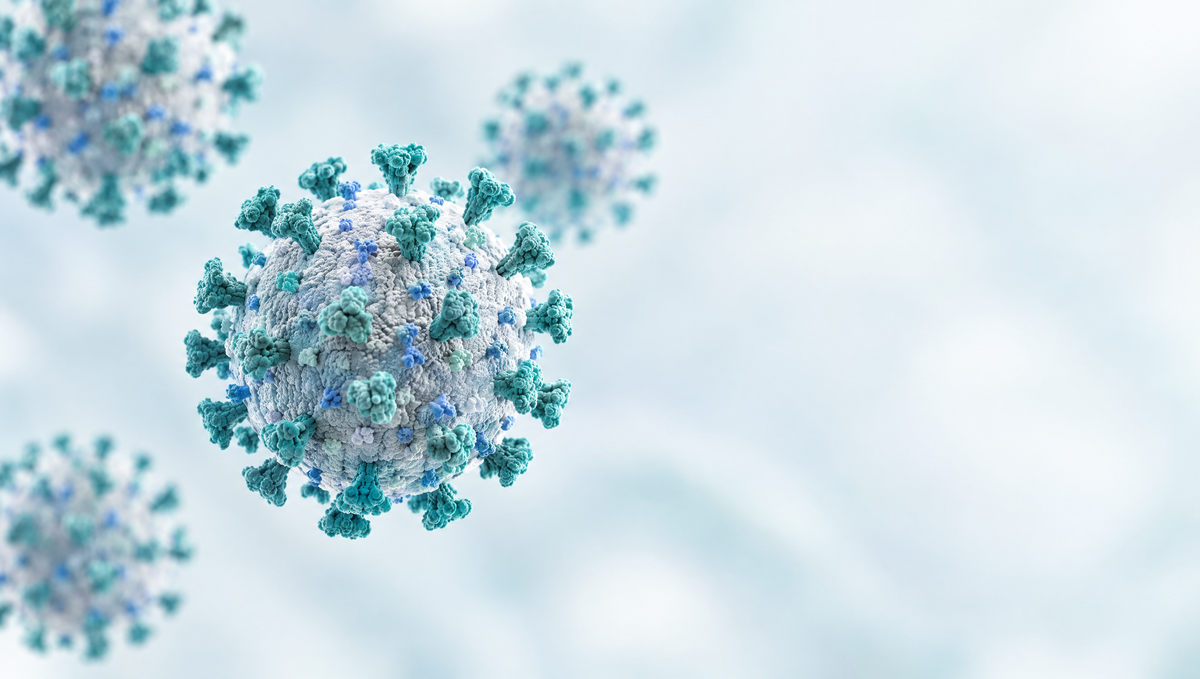
In autumn 2026, the recombinant variant XFG is dominant in the EU/EEA, according to the European Centre for Disease Prevention and Control (ECDC, 25 September 2026). Worldwide, XFG leads ahead of NB.1.8.1 in the WHO SARS-CoV-2 circulation dashboard for 26 July to 23 August 2026, although those shares rest on only 216 sequences. COVID-19 symptoms in 2026 are those of a respiratory infection, and no authority confirms a variant-specific symptom picture.

Key takeaways
- No variant of concern: the WHO (27 July 2026) and the ECDC (25 September 2026) list none.
- Dominant lineages: XFG dominates the EU/EEA (ECDC, 25 September 2026) and reached 48.15% of the 216 sequences available worldwide (WHO, 26 July to 23 August 2026).
- Symptoms: fever, chills and sore throat lead the list (WHO, 2025); no variant-specific picture is confirmed.
- Incubation period: for the Omicron subvariants circulating since 2023, 3 to 4 days on average, range 1 to 8 days (RKI, 2026).
- Vaccines 2026/27: XFG-adapted vaccines (EMA, 29 May 2026); STIKO standard vaccination from age 75 plus risk groups (9 July 2026).
Current situation in autumn 2026
In calendar week 38 of 2026 (14 to 20 September), activity of acute respiratory illness (ARI) in Germany rose to a moderate level, while reported COVID-19 case numbers stayed stable at a low level, according to the Robert Koch Institute (RKI). SARS-CoV-2 levels in wastewater remained low, with slightly increased values (RKI, week 38 of 2026).
Rhinoviruses dominated the sentinel samples in that week.
In the EU/EEA, SARS-CoV-2 activity was increasing slightly in primary care and had slightly decreased in hospitals in week 38 of 2026; hospital detections mainly concerned adults over 65 (ECDC, week 39 of 2026). In the United States, COVID-19 activity remained elevated but was declining nationally on 25 September 2026, with low hospitalization rates that were highest among adults aged 65 and older (CDC, 25 September 2026).
In the CDC's empiric estimates for the 4-week period ending 29 August 2026, XFG descendants led in the United States: SW.2 at 33%, RV.1 at 10% and XFG.1.1 at 8%, while BA.3.2 and NB.1.8.1 each accounted for 3%. The CDC publishes no Nowcast because too few sequences are reported (CDC, updated 25 September 2026).
Worldwide, 2.4% of SARS-CoV-2 PCR tests were positive in the week to 6 September 2026, according to the WHO. The WHO could not update its variant data in late September 2026 because of technical issues (WHO circulation dashboard, retrieved 29 September 2026).
COVID-19 seasons in Germany start with rising case numbers from mid-August and peak between mid-October and early December (STIKO, Epidemiologisches Bulletin 28/2026). Since week 40 of 2025, the RKI has received 117,849 COVID-19 cases and 1,625 deaths with laboratory-confirmed SARS-CoV-2 infection in the 2025/26 season; 96% of those who died were 60 or older (preliminary data, status 1 September 2026).
Current SARS-CoV-2 variants at a glance
As of 27 July 2026, the WHO lists no variant of concern (VOC) and names JN.1 as a variant of interest; its list of variants under monitoring, dated 27 July 2026, names PQ.16.1.1, NB.1.8.1, XFG and BA.3.2. As of 25 September 2026, the ECDC lists no VOC, one variant of interest (BA.2.86) and three variants under monitoring: NB.1.8.1, XFG and BA.3.2.
Because it currently receives too few SARS-CoV-2 detections, the RKI has not reported German lineage shares since its weekly report for calendar week 17 of 2026 (RKI, 28 April 2026; monthly report weeks 32 to 35, status 1 September 2026). The shares below therefore come from international sources and always state source, period and sample size. Worldwide, only 216 sequences were available for the 28 days to 23 August 2026 (WHO). The nicknames "Nimbus", "Stratus" and "Cicada" are unofficial and are not WHO names; "Nimbus" and "Stratus" were coined by evolutionary biologist T. Ryan Gregory and colleagues (Gavi VaccinesWork, 2025). RKI/STIKO put all three in quotation marks (Epidemiologisches Bulletin 28/2026), and the EMA notes that BA.3.2 earned the nickname "cicada variant" after its sudden reappearance in late 2024 (EMA, 2026).
| Nickname (unofficial) | Pango lineage | WHO classification (27 July 2026) | ECDC classification (25 September 2026) | Share (source, period, sample size) |
|---|---|---|---|---|
| Nimbus | NB.1.8.1 | VUM (since 23 May 2025) | VUM (community transmission) | 20.37% worldwide (WHO, 26 Jul to 23 Aug 2026, 216 sequences in total) |
| Stratus | XFG | VUM (since 25 June 2025) | VUM (dominant in the EU/EEA) | 48.15% worldwide (WHO, 26 Jul to 23 Aug 2026, 104 of 216 sequences from 4 countries) |
| Cicada | BA.3.2 | VUM (since 5 Dec 2025) | VUM (community transmission) | 0.93% worldwide (WHO, 26 Jul to 23 Aug 2026, 216 sequences in total) |
| none | PQ.16.1.1 | VUM (since 27 July 2026) | not listed separately | 5.09% worldwide (WHO, 26 Jul to 23 Aug 2026, 216 sequences in total) |
| none | JN.1 | VOI (since 18 Dec 2023) | within VOI BA.2.86 | 13.89% worldwide (WHO, 26 Jul to 23 Aug 2026, 216 sequences in total) |
Nimbus (NB.1.8.1)
NB.1.8.1 derives from the recombinant lineage XDV.1.5.1 of the JN.1 family, with the earliest sample from 22 January 2025 (WHO risk evaluation, 23 May 2025). The WHO rates its additional public health risk as low. In laboratory tests, post-vaccination neutralizing titers against NB.1.8.1 were only 1.3-fold lower than against LP.8.1 (EMA, 2026). In Germany, NB.1.8.1 became the most frequent lineage in week 3 of 2026 at 52% of 48 sequences (RKI, week 5 of 2026).
Stratus (XFG)
XFG is a recombinant of the Omicron lineages LF.7 and LP.8.1.2, with the earliest sample from 27 January 2025. The WHO designated it a variant under monitoring on 25 June 2025 and rates the additional risk as low. In the EU/EEA, the ECDC marks XFG as dominant (25 September 2026), and it also leads in the WHO global data (see the table above).
Cicada (BA.3.2)
BA.3.2 descends from the Omicron variant BA.3 and differs from BA.3 by 53 spike mutations (WHO risk evaluation, 5 December 2025). Its earliest sample was collected on 22 November 2024 in South Africa; the CDC reports first detections in the Netherlands on 12 April 2025 and in Germany on 29 April 2025 (MMWR, 19 March 2026). BA.3.2 has spread globally but has not become dominant anywhere (EMA, 2026) and accounted for 0.93% of the 216 sequences available worldwide (WHO, 26 July to 23 August 2026).
PQ.16.1.1: the newest variant under monitoring
PQ.16.1.1 is a descendant of NB.1.8.1 with the earliest sequence from 25 March 2026; the WHO designated it a variant under monitoring on 27 July 2026 and rates the additional public health risk as low. It accounted for 5.09% of the 216 sequences available worldwide (WHO, 26 July to 23 August 2026). Up to 8 July 2026, Europe had reported just one PQ.16.1.1 sequence (France), while most sequences came from Singapore (WHO risk evaluation, 27 July 2026). PQ.16.1.1 carries the nucleocapsid change T135I, but the WHO currently sees no evidence that it undermines antigen tests; lineage-specific studies of test performance are not yet available (WHO, 27 July 2026).
VOC, VOI and VUM: how variants are classified
Under the WHO working definitions updated in 2023, a variant of concern (VOC) must meet the variant of interest (VOI) definition plus at least one of three criteria: worse clinical severity, substantial strain on health systems, or a significant drop in vaccine protection against severe disease (WHO, 2023).
Since 15 March 2023, the WHO reserves Greek letters for VOCs and names other variants with scientific nomenclature such as Pango (WHO, 2023). Detectability by diagnostics is a VOI feature, not a VOC criterion. The WHO lists JN.1 as a variant of interest, while the ECDC lists BA.2.86 for the same lineage family (ECDC, 25 September 2026); JN.1 is BA.2.86 plus the spike change L455S (WHO variants dashboard).
COVID-19 symptoms in 2026
Possible COVID-19 symptoms in 2026 include fever, runny nose, cough, sore throat and shortness of breath (RKI guide, 24 August 2026). The WHO lists fever, chills and sore throat as the most common symptoms (WHO fact sheet, 2025).
Among the less common symptoms, the WHO names hoarse voice, runny or blocked nose, severe fatigue, headache and loss or change of the sense of taste or smell (WHO, 2025). A complete loss of smell or taste has become much rarer since Omicron began circulating (RKI, 2026; CDC, 5 February 2026).
No authority describes symptoms specific to NB.1.8.1, XFG or BA.3.2, and the "razor blade" sore throat reported for NB.1.8.1 has not been confirmed in scientific studies (Gavi VaccinesWork, 2025).
COVID-19, flu or RSV: how to tell them apart
Fever, cough and sore throat can occur with COVID-19, flu and RSV alike, so symptoms alone do not reveal the pathogen. The RKI notes that any respiratory infection can also be caused by SARS-CoV-2 (RKI guide, 24 August 2026). A test can help clarify the cause, but a negative antigen test does not rule out an infection. Our symptom comparison shows the typical patterns, and combination tests for COVID-19, influenza and RSV cover several pathogens at once.
Incubation period: how long until symptoms appear
For the Omicron subvariants circulating since 2023, symptoms appear on average 3 to 4 days after infection, with a range of 1 to 8 days (RKI guide, 24 August 2026). The CDC gives a median incubation period of 3 to 4 days for Omicron (CDC, 5 February 2026). This means you can pass the virus on before you notice any symptoms (see the next section).
How long are you contagious?
You can be contagious 2 to 3 days before symptoms begin (RKI FAQ, 2026). According to the RKI, replication-competent virus is shed for about 5 days after symptom onset (RKI guide, 24 August 2026). According to the CDC, transmissibility peaks from before onset to a few days after, and most people can shed virus for up to 10 days after infection (CDC, 5 February 2026). Our detailed guide explains how long you stay contagious with a cold, flu, COVID-19 or RSV and when you can return to work or school.
| Source | Contagious before symptoms | After symptom onset | Return to normal activities |
|---|---|---|---|
| RKI (guide, 24 August 2026; FAQ, 2026) | 2 to 3 days before onset | about 5 days of replication-competent virus | stay home 3 to 5 days and until symptoms clearly improve |
| CDC (2025, 2026) | transmissibility peaks from before onset to a few days after | most people can shed virus for up to 10 days after infection (counted from infection, not onset) | once symptoms improve and you have been fever-free without fever-reducing medication for 24 hours, then 5 days of added precautions |
In most cases the infection is mild to moderate and you recover within one to two weeks (RKI, 2026). If symptoms persist, our article on Long COVID symptoms, therapy and research summarizes the current state of knowledge.
RKI: around 5 days after symptom onset
The RKI advises anyone with a respiratory infection to stay home for 3 to 5 days and until symptoms clearly improve, because any such infection can be caused by SARS-CoV-2 (RKI guide, 24 August 2026). Virus components remain detectable by PCR for about 11 days after symptom onset; people with a weakened immune system and severely ill patients can shed virus for longer.
CDC: shedding up to 10 days after infection, then 5 days of added precautions
According to the CDC, you can return to your normal activities when your symptoms have been improving overall and you have been fever-free without fever-reducing medication for at least 24 hours (CDC, 2025). For the next 5 days, the CDC recommends added precautions such as cleaner air, good hygiene, a well-fitted mask, distancing or testing.
COVID-19 vaccines for the 2026/27 season
For the 2026/27 season, the European Medicines Agency (EMA) recommends COVID-19 vaccines adapted to XFG; its Emergency Task Force gave this recommendation on 29 May 2026, and the CHMP followed with a positive opinion in July 2026. Vaccines targeting LP.8.1, the strain recommended for the 2025/26 campaign (EMA, 2025), could still be considered for vaccination campaigns in 2026 (EMA, 29 May 2026).

The switch follows laboratory data: compared with LP.8.1, post-vaccination neutralizing titers were 1.3-fold lower for NB.1.8.1, 3.5-fold lower for XFG and 6.7-fold lower for BA.3.2 (EMA, antigenic composition recommendation, 2026). These are laboratory values, not clinical effectiveness. The WHO recommended monovalent LP.8.1 as the vaccine antigen in May 2026 and names XFG or NB.1.8.1 as alternatives (WHO, 16 May 2026). In the United States, the FDA's advisory committee recommended XFG as the preferred strain for monovalent 2026/27 vaccines (FDA, 2026).
In Germany, the STIKO has recommended since 9 July 2026 one COVID-19 vaccination per season for people aged 75 and over and for these groups: residents of care facilities and people at increased risk in disability-support facilities; people from 6 months at increased risk from an underlying condition; pregnant women with an underlying condition or pregnancy complications from the second trimester; care-facility staff in direct contact with residents; medical staff with an increased occupational infection risk or who care for high-risk patients; and family members and close contacts from 6 months of people who are not expected to develop a protective immune response after vaccination (STIKO, Epidemiologisches Bulletin 28/2026). The STIKO advises vaccinating preferably at the start of the season in late summer or early autumn and, if possible, keeping a minimum interval of 6 months after a documented infection or the last vaccination (STIKO, Epidemiologisches Bulletin 28/2026). For healthy people under 75 and healthy pregnant women, the RKI currently sees no indication for a COVID-19 vaccination (RKI, 24 August 2026). Vaccination remains protective, especially against severe disease, but this effect wanes over time (ECDC, 4 September 2026).
Do rapid tests detect current variants?
We found no variant-specific evaluation of rapid tests for NB.1.8.1, XFG, BA.3.2 or PQ.16.1.1 by the PEI, BfArM, FDA or ECDC, and the Paul-Ehrlich-Institut (PEI) has not been involved in evaluating SARS-CoV-2 rapid tests since 30 June 2022 (PEI, 2023). For the newest variant, PQ.16.1.1, the WHO currently sees no evidence that it causes antigen-test escape, PCR target failure or reduced diagnostic performance, but lineage-specific studies of test performance are not yet available (WHO, 27 July 2026).

In December 2021, the PEI reported that the large majority of the 245 antigen tests it had evaluated detect the nucleocapsid (N) protein, which is considerably more conserved than the spike protein (PEI, 30 December 2021); that assessment concerned Omicron BA.1. The N protein is not completely unchanged either: PQ.16.1.1 carries the N change T135I, and the WHO asks member states to assess assay performance (WHO, 27 July 2026).
Antigen tests only detect an infection when the viral load is high at the time of testing (PEI, 2021), and their sensitivity varies from test to test and is generally well below that of a PCR. A negative antigen test does not rule out an infection; PCR remains the gold standard (RKI, 24 August 2026). The EU list of CE-marked COVID-19 antigen tests has not been updated since 17 May 2023 (PEI, 2023), so it says nothing about the current variants. Read more about rapid test reliability and quality, follow our home test guide or browse our COVID-19 tests.
When should you test?
If you have symptoms of a respiratory infection, a test can help clarify the cause. Antigen tests only detect an infection when the viral load is high at the time of testing (PEI, 2021), so a single negative result is not conclusive. If your first antigen test is negative but you have symptoms, the FDA advises testing again after 48 hours, for a total of at least two tests. Without symptoms, use at least three tests, each 48 hours apart (FDA, 2025). The instructions for use of your specific test always take precedence. Our overview of PCR, antigen and antibody tests explains the methods.
When should you see a doctor?
Contact a doctor if you have shortness of breath, a persistent fever or symptoms that get worse, and seek advice early if you belong to a risk group. Shortness of breath is one of the possible COVID-19 symptoms listed by the RKI (RKI guide, 24 August 2026). Older adults and people with underlying conditions carry the burden of severe disease: 96% of those who died with a laboratory-confirmed SARS-CoV-2 infection in the 2025/26 season were 60 or older (RKI, preliminary data, status 1 September 2026). The ECDC considers it unlikely that the variants currently classified as VOI or VUM cause more severe infections than earlier variants or reduce vaccine protection against severe disease; adults aged 65 and over, people with underlying conditions and people who have never been infected can still become seriously ill (ECDC, 4 September 2026). More on antiviral resistance in SARS-CoV-2.
From Alpha to Omicron: a short timeline
Since 2020, the WHO has designated several variants of concern, among them Alpha and Beta (18 December 2020), Delta (11 May 2021) and Omicron (26 November 2021) (WHO, historical working definitions, 2023). Since then no new VOC has been added; today's lineages are tracked as VOI or VUM (WHO, 27 July 2026).
A modeling study estimated that Alpha had a 43 to 90% higher reproduction number than previously circulating variants in England (Davies et al., Science 2021), and Omicron carried 30 amino acid changes, three small deletions and one small insertion in the spike protein compared with the original virus (ECDC, 2021). The WHO ended the public health emergency of international concern on 5 May 2023 (WHO). In Germany, hospitalized COVID-19 cases fell from about 135,000 in 2023/24 to about 77,000 in 2024/25 and about 50,000 in 2025/26 (status 12 June 2026; STIKO, Epidemiologisches Bulletin 28/2026).
Key variants since 2020
| Time | Variant (lineage) | WHO status | What changed |
|---|---|---|---|
| Sep 2020 | Alpha (B.1.1.7) | VOC from 18 Dec 2020 | higher reproduction number |
| Oct 2020 | Delta (B.1.617.2) | VOI 4 Apr 2021, VOC 11 May 2021 | first documented in India |
| Nov 2021 | Omicron (B.1.1.529) | VOC from 26 Nov 2021 | many spike changes |
| Aug 2023 | JN.1 | VOI from 18 Dec 2023 | ancestor of NB.1.8.1, XFG and PQ.16.1.1 (not BA.3.2) |
| listed May 2024 | KP.3 | VUM from 3 May 2024 | JN.1 descendant |
| Nov 2024 | BA.3.2 | VUM from 5 Dec 2025 | Omicron BA.3 descendant |
| Mar 2026 | PQ.16.1.1 | VUM from 27 July 2026 | NB.1.8.1 descendant |
Frequently asked questions
As of 25 September 2026, the ECDC marks XFG as dominant in the EU/EEA, and the WHO recorded XFG at 48.15% of the 216 sequences available worldwide for the 28 days to 23 August 2026.
Which COVID-19 variant is currently dominant?
XFG is marked as dominant in the EU/EEA (ECDC, 25 September 2026) and reached 48.15% of the 216 sequences available worldwide, ahead of NB.1.8.1 with 20.37% (WHO, 26 July to 23 August 2026). The RKI has reported no German lineage shares since calendar week 17 of 2026.
What are the symptoms of COVID-19 in 2026?
Fever, chills and sore throat are the most common symptoms (WHO fact sheet, 2025). The RKI lists fever, runny nose, cough, sore throat and shortness of breath as possible symptoms (RKI guide, 24 August 2026). Loss of smell or taste has become less common since Omicron began circulating (CDC, 5 February 2026), and the RKI says a complete loss has become much rarer (RKI guide, 24 August 2026).
What are the first signs of COVID-19 in 2026?
Authorities do not name specific first signs. Possible symptoms include fever, runny nose, cough, sore throat and shortness of breath (RKI guide, 24 August 2026), and the WHO names fever, chills and sore throat as the most common (WHO fact sheet, 2025). Flu and RSV can cause similar symptoms, so a test can help clarify the cause, but a negative antigen test does not rule out an infection (RKI guide, 24 August 2026).
What symptoms are linked to the Cicada variant (BA.3.2)?
No authority (RKI, CDC, WHO or ECDC) describes symptoms specific to BA.3.2 (status September 2026), so the general COVID-19 symptom list applies: fever, runny nose, cough, sore throat and shortness of breath (RKI guide, 24 August 2026). BA.3.2 has spread globally but has not become dominant anywhere (EMA, 2026) and accounted for 0.93% of the 216 sequences available worldwide (WHO, 26 July to 23 August 2026).
What are Nimbus, Stratus and Cicada?
They are unofficial nicknames: "Nimbus" is NB.1.8.1, "Stratus" is XFG and "Cicada" is BA.3.2. RKI/STIKO use them in quotation marks (Epidemiologisches Bulletin 28/2026, 9 July 2026), and the EMA notes that BA.3.2 earned the nickname "cicada variant" after its sudden reappearance in late 2024 (EMA, 2026). The WHO does not use these names.
How long is the incubation period of COVID-19?
For the Omicron subvariants circulating since 2023, the incubation period averages 3 to 4 days, with a range of 1 to 8 days (RKI guide, 24 August 2026). The CDC gives a median incubation period of 3 to 4 days for Omicron (CDC, 5 February 2026).
How long does COVID-19 last with the current variants?
Most people have mild to moderate symptoms and recover within one to two weeks (RKI, 2026). Replication-competent virus is shed for about 5 days after symptom onset, and virus components can remain detectable by PCR for about 11 days (RKI, 24 August 2026).
Is COVID-19 still around in 2026, and is there a new wave?
COVID-19 is still circulating in 2026. In calendar week 38 of 2026, reported case numbers in Germany were low and stable, and wastewater levels were low with slightly increased values (RKI). Seasons usually start rising from mid-August and peak between mid-October and early December (STIKO, Epidemiologisches Bulletin 28/2026).
Which COVID-19 variants are there, and what are they called?
As of 27 July 2026, the WHO lists no VOC, names JN.1 as a variant of interest and lists PQ.16.1.1, NB.1.8.1, XFG and BA.3.2 as variants under monitoring (list dated 27 July 2026). The ECDC lists BA.2.86 as a variant of interest for the same lineage family, plus NB.1.8.1, XFG and BA.3.2 under monitoring (25 September 2026).
Which symptoms are linked to new variants such as BA.3.2, and when should I seek medical advice?
No authority (RKI, CDC, WHO or ECDC) describes symptoms specific to NB.1.8.1, XFG or BA.3.2 (status September 2026). Contact a doctor if you have shortness of breath, a persistent fever or symptoms that get worse, and seek advice early if you belong to a risk group. Adults aged 65 and over, people with underlying conditions and people who have never been infected can still become seriously ill (ECDC, 4 September 2026).
Sources
Last reviewed: September 2026.
- ECDC: SARS-CoV-2 variants of concern, status 25 September 2026. ecdc.europa.eu
- ECDC: Communicable disease threats report, week 39 (19 to 25 September 2026). ecdc.europa.eu
- ECDC: Communicable disease threats report, week 36 (29 August to 4 September 2026). ecdc.europa.eu
- ECDC: Threat Assessment Brief, Omicron (B.1.1.529), first update, December 2021. ecdc.europa.eu
- RKI: ARE-Bericht, calendar week 38 (14 to 20 September 2026). rki.de
- RKI: ARE monthly report, weeks 32 to 35 (status 1 September 2026). influenza.rki.de
- RKI: ARE weekly report, calendar week 5 of 2026. influenza.rki.de
- RKI: ARE weekly report, calendar week 17 (status 28 April 2026). influenza.rki.de
- RKI: RKI guide on COVID-19, status 24 August 2026. rki.de
- RKI: FAQ on COVID-19 and acute respiratory infections, 2026. rki.de
- RKI/STIKO: Epidemiologisches Bulletin 28/2026, 9 July 2026. rki.de
- WHO: COVID-19 variants dashboard, status 27 July 2026. data.who.int
- WHO: SARS-CoV-2 circulation dashboard, 26 July to 23 August 2026, retrieved 29 September 2026. data.who.int
- WHO TAG-VE: Risk evaluation PQ.16.1.1, 27 July 2026. cdn.who.int
- WHO TAG-VE: Risk evaluation NB.1.8.1, 23 May 2025. cdn.who.int
- WHO TAG-VE: Risk evaluation XFG, 25 June 2025. cdn.who.int
- WHO TAG-VE: Risk evaluation BA.3.2, 5 December 2025. cdn.who.int
- WHO: Updated working definitions and primary actions for SARS-CoV-2 variants, 2023. who.int
- WHO: Historical working definitions and primary actions for SARS-CoV-2 variants, 2023. who.int
- WHO: COVID-19 Epidemiological Update, Edition 167, 2024. who.int
- WHO: Statement on the fifteenth IHR Emergency Committee, 5 May 2023. who.int
- WHO: Coronavirus disease (COVID-19) fact sheet, 2025. who.int
- WHO TAG-CO-VAC: Statement on the antigen composition of COVID-19 vaccines, 16 May 2026. who.int
- EMA: ETF recommends updating COVID-19 vaccines to target new LP.8.1 variant, 2025. ema.europa.eu
- EMA: ETF recommends updating COVID-19 vaccines to target XFG, 29 May 2026. ema.europa.eu
- EMA: Recommendation on the antigenic composition of COVID-19 vaccines 2026-2027 (EMA/127531/2026). ema.europa.eu
- EMA: CHMP meeting highlights, 20 to 23 July 2026. ema.europa.eu
- CDC: Variants and Genomic Surveillance, updated 25 September 2026. cdc.gov
- CDC: Respiratory Illnesses Data Channel, 25 September 2026. cdc.gov
- CDC: Clinical Presentation of COVID-19, 5 February 2026. cdc.gov
- CDC MMWR: Early detection and surveillance of the SARS-CoV-2 variant BA.3.2, 19 March 2026. cdc.gov
- CDC: Preventing spread of respiratory viruses when you are sick, 2025. cdc.gov
- PEI: SARS-CoV-2 test systems, status 2023. pei.de
- PEI: Antigen tests and the Omicron variant, 30 December 2021. pei.de
- FDA: At-Home COVID-19 Diagnostic Tests FAQ, 2025. fda.gov
- FDA: COVID-19 vaccines (2026-2027 formula) for use in the United States beginning in fall 2026, 2026. fda.gov
- Gavi VaccinesWork: Eight things you need to know about the new "Nimbus" and "Stratus" COVID-19 variants, 2025. gavi.org
- Davies NG et al.: Estimated transmissibility and impact of SARS-CoV-2 lineage B.1.1.7 in England, Science 2021. pubmed.ncbi.nlm.nih.gov
